
Jumping is one of the most common complaints I hear from dog owners.
Guests come over, and the dog goes from calm to completely over the top. They rush the door, jump on people, paw at clothes, scratch arms, bark, mouth hands, or bounce around like they have no idea what to do with all that excitement.
For some dogs, it starts as a social greeting. They are excited, happy, and trying to get closer to the person walking in. For others, it becomes a bigger problem because they have never been taught how to handle greetings in a more controlled way.
The good news is that jumping can improve, but it takes more than yelling “off” once your dog is already in the air. A better plan includes stronger skills, clearer expectations, and a greeting routine that teaches your dog what to do instead.
Step 1: Understand Why Your Dog Is Jumping
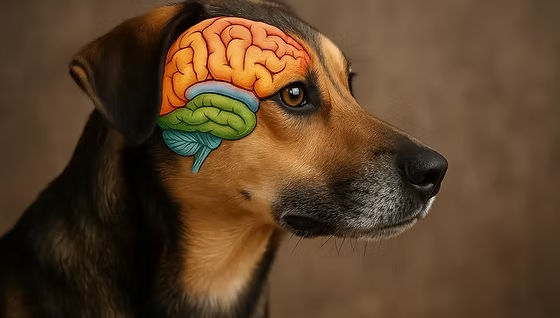
Most dogs are not jumping because they are trying to be bad or disrespectful. In most cases, they jump because the behavior has worked for them in some way.
Jumping gets them closer to people. It brings attention, hands, voices, laughter, movement, and sometimes even play. Even when you are frustrated, your dog may still see that reaction as part of the greeting.
For some dogs, jumping is pure excitement. Others are looking for attention, struggling with frustration, feeling anxious, or lacking impulse control. Some dogs are loose, wiggly, and social. Others get pushy and over the top. You may also see dogs who are unsure and simply do not know how to handle people coming into the home.
That is why it helps to look at what is driving the behavior before trying to fix it. Once you understand the reason behind the jumping, it becomes much easier to build a plan that actually makes sense for your dog.
Step 2: Stop Rewarding the Jump
Most people do not mean to reward jumping, but they often do without realizing it. They push the dog off, say “off” over and over, grab the collar, laugh, talk to the dog, or tell the guest, “Sorry, he’s just excited.”
Then there is Uncle Bob, who comes over and loves to roughhouse with the dog. He pats his chest, gets the dog fired up, laughs when the dog jumps, and says, “It’s fine, I don’t mind.” The problem is that your dog does not know jumping is allowed with Uncle Bob but not with everyone else. They are just learning that jumping can work.
Dogs repeat behavior that gets reinforced. When jumping leads to attention, play, touch, excitement, or access to people, the behavior is more likely to continue. When jumping stops working and calm behavior starts getting rewarded instead, your dog has a reason to change.
So the goal is not to get louder or more frustrated. The goal is to make jumping less valuable and make four paws on the floor more rewarding. If your dog jumps, attention goes away. When their feet stay on the floor, that is when attention, praise, food, or a greeting can happen.
Step 3: Reward Four Paws on the Floor
Your dog needs to learn what behavior actually works instead of jumping.
A simple place to start is teaching four paws on the floor. The moment all four feet are down, mark it with “yes” and reward. That reward might be a treat, calm praise, or a chance to greet the person, depending on what your dog can handle in that moment.
The pattern should be clear: jumping makes attention go away, while feet on the floor make good things happen.
Timing matters here. Do not wait until your dog is already worked up again. Catch the good choice the second it happens, even if it only lasts for a moment at first. Over time, those small moments of control are what you build on.
Step 4: Teach a Replacement Behavior
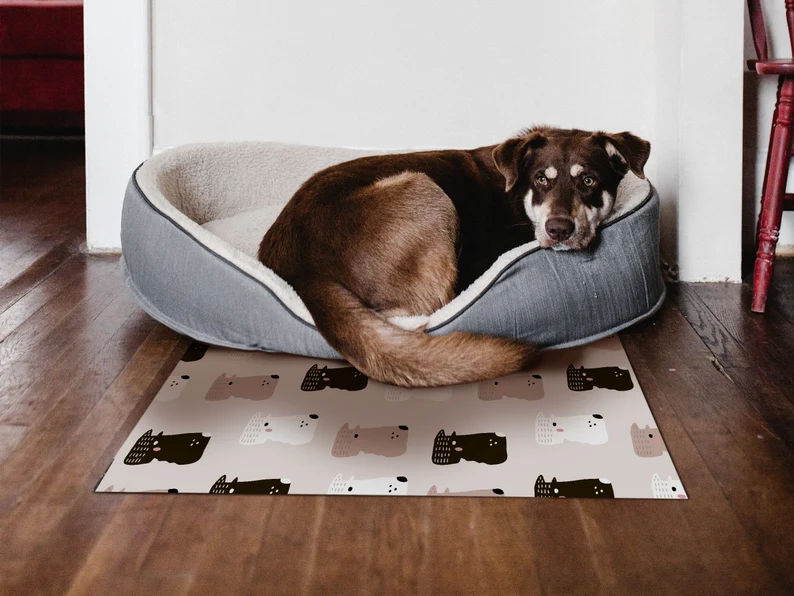
Your dog cannot just be told what not to do. They need to learn what to do instead.
This is where an incompatible behavior can help. An incompatible behavior is something your dog cannot do at the same time as jumping. For example, a dog cannot jump on a guest and sit at the same time. They also cannot jump all over someone while staying on a mat across the room.
For some dogs, a simple sit is a good starting point. The guest comes in, the dog sits, and the guest calmly hands them a treat instead of immediately reaching over them to pet. This keeps the greeting lower, slower, and more controlled.
Other dogs may find it too hard to sit right in front of a guest at first. In that case, using a mat or place cue can work better. The dog learns to go to their mat when someone comes in, and you reward them there while the guest enters. Now they have a clear place to be instead of rushing the door.
A nose target can also be used as part of the greeting. Instead of jumping up toward hands and faces, the dog learns to touch their nose to a hand, then come back to you for a reward. That gives them a simple way to say hello without launching at the person.
The key is choosing a behavior your dog can actually do when they are excited. If they are already at a level ten, asking for a perfect sit right at the doorway may be too much. Start with more distance, use the leash when needed, and make the setup easier so your dog can be successful.
Step 5: Manage the Doorway
The doorbell rings, the dog barks, the owner rushes, the guest walks in, and the dog gets access before they are ready to handle it. For a dog that already struggles with self-control, that setup is too much too fast.
This is where management matters. Not because we are trying to avoid training, but because we need to create a setup where training can actually happen.
One of my go-to methods for jumping is simple: step on the leash.
I usually step on about the first third to half of the leash, depending on the size of the dog. The goal is not to pin the dog down or make them feel trapped. They should still be able to sit, lie down, stand up, take treats, and make choices. What they should not be able to do is launch up and jump on the guest.
Now you are not waiting for the jump and correcting after the fact. You are preventing the jump from happening in the first place, which gives your dog a chance to learn what works instead.
Once jumping is no longer available, you can start rewarding better choices. Four paws on the floor. Sitting. Looking at the guest without launching. Taking a treat calmly. Checking back in with you.
The leash is not the training by itself. It is the management tool that keeps your dog from practicing the wrong behavior while you reward the behavior you actually want. That is the difference.
Step 6: Coach Your Guests
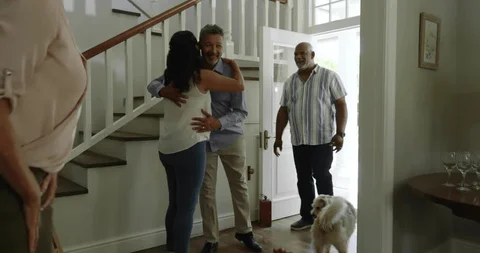
Your guests are part of the training plan, whether they know it or not.
And yes, that includes Uncle Bob, who walks in, slaps his chest, gets your dog fired up, and says, “It’s fine, I don’t mind.” Uncle Bob may not mind, but your dog is taking notes.
If one person pets the dog for jumping, another pushes the dog off, and someone else roughhouses with them at the door, the message gets confusing fast. It becomes much harder for your dog to understand what is actually expected.
Before guests come in, give them a simple job.
You can say:
“Please ignore him until his feet are on the floor.”
“Do not pet her if she jumps.”
“We’re working on greetings, so I’m going to keep him on leash at first.”
“If she gets too excited, I’ll move her back and try again.”
This is also where I like using a simple red light, green light greeting. Four paws on the floor means green light. The guest can calmly say hello or offer a treat. Jumping means red light. The greeting stops, the guest goes boring, and we reset.
This is not about being rude to your guests. It is about giving your dog a fair chance to learn. Progress is hard when every person who walks in the door plays by a different set of rules.
Step 7: Practice Away from the Big Moment
A lot of owners only work on jumping when company is already at the door.
That is the hardest time to train.
At that point, the dog is already excited, the doorbell has already gone off, people are walking in, and everyone is reacting. That is not the best time to teach a brand-new skill. That is the test, not the practice.
Work on the smaller pieces before the real greeting happens. Practice going to the mat. Practice sitting for attention. Practice leash handling near the door. Practice hearing a knock or doorbell sound. Have one family member walk in and out while you reward calm choices.
This matters because dogs get better at what they practice. If every greeting turns into barking, jumping, collar grabbing, and chaos, your dog is getting better at that routine. They are rehearsing failure.
Instead, set up easier reps where your dog can actually win. Start with one person walking in calmly. Keep the dog on leash. Have the guest wait before petting. Toss the reward on the floor before your dog has a chance to jump.
Successful reps build the behavior you want. Your dog learns, “When people come in, I can keep my feet down, check in, sit, go to my mat, and still get good things.”
Training works better when the dog is not already overwhelmed. Start with easier setups, help them be successful, and then slowly build toward the harder greetings.
Step 8: Build a Greeting Routine You Can Repeat
The goal is to build a greeting routine your dog can understand and repeat. Instead of letting your dog rush the door and figure it out in the moment, have the leash on before the guest comes in. Create some distance from the doorway, step on the first third to half of the leash, and reward your dog for keeping four paws on the floor, sitting, checking in, or taking treats calmly.
Then use a simple red light, green light greeting. Green light means your dog has four paws on the floor and is under control, so the guest can calmly say hello or hand them a treat. Red light means your dog jumps, gets pushy, or starts getting too excited, so the greeting stops, the guest goes boring, and you create more distance before trying again.
Now the pattern is clear. Calm behavior makes the greeting happen. Jumping makes the greeting stop.
Not every dog is ready to greet right away, and that is okay. Some dogs need more distance, more leash practice, or a chance to settle on a mat after the first few seconds. The important part is that you are not letting the greeting turn into chaos and then trying to fix it afterward. You are setting the dog up, preventing the jump, rewarding better choices, and teaching them what works.
How Coach Wags Dog Training Looks at Jumping
Jumping on guests is usually not just about the jump itself. The jumping is often the behavior everyone sees, but there are usually other pieces feeding into it. Focus around distractions, impulse control, leash skills, door manners, settling after excitement, and learning how to greet people without going over the top can all be part of the bigger picture.
That is where private obedience training can be helpful. At Coach Wags Dog Training, the goal is to look at the whole picture, not just the moment your dog’s paws leave the floor. We look at what happens before the jump, what happens after the jump, what your dog is learning from people, and what skills need to be built so they have a better option.
For dogs who jump on guests, training may include building a clear greeting routine, teaching four paws on the floor, using sit or go-to-mat as an alternative behavior, practicing leash handling at the door, using red light green light greetings, and helping the dog settle once people are inside.
The goal is not to make your dog less friendly or take away their personality. It is to help them greet people with more control, recover faster, and become a more well-mannered member of the family.
That is where a structured training plan can make a big difference.
If your dog is jumping on guests, barking at the door, pulling toward people, or struggling to calm down once visitors come inside, private obedience training can help you build a clearer plan. Coach Wags Dog Training works with dogs and families in Edgerton, Madison, Janesville, and surrounding areas to build better manners, better communication, and calmer routines at home.
If your dog is jumping on guests, rushing the door, pulling on leash, or struggling to listen when excited, a private obedience consult can help you build a clearer plan.