
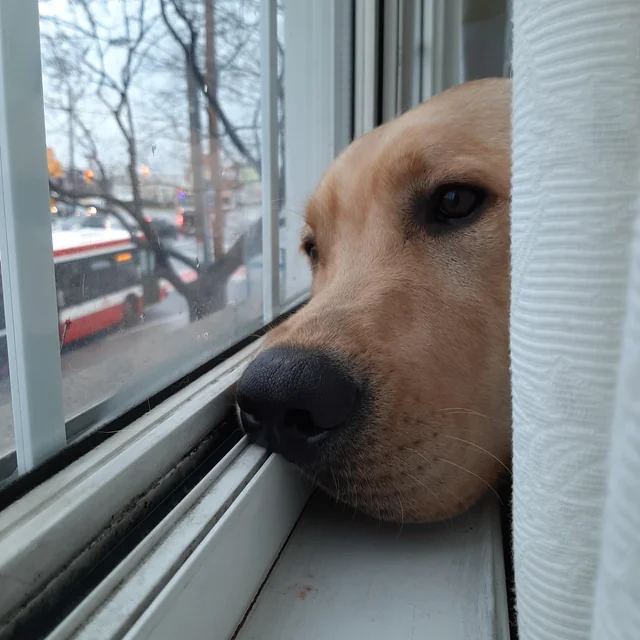
Winter can be one of the toughest seasons for dog parents. Cold temperatures, icy sidewalks, shorter days, and unpredictable weather can throw routines off fast — and that’s when winter dog behavior problems often show up. Dogs may refuse to potty in the snow, walks become inconsistent or unsafe, and behaviors you thought were handled start popping back up indoors. If winter feels harder with your dog, you’re not imagining it — and your dog isn’t being stubborn either. Behavior is always influenced by environment, and winter changes the environment in a big way. At Coach Wags Dog Training, we focus on simple routines, mental enrichment, and practical training strategies that help dogs stay calmer and more focused through the winter months.
Why Dogs Struggle More in Winter
Dogs rely on consistency, movement, and engagement. Winter often reduces all three at once.
Common winter challenges include:
- Dogs refusing to potty outside
- Increased barking, chewing, or restlessness
- Fewer or shorter walks due to cold, ice, or darkness
- Excess indoor energy with no clear outlet
- Owners feeling short on time, motivation, or daylight
When physical outlets shrink, mental needs don’t. In many dogs, they increase.
When those needs go unmet, dogs create their own solutions — which usually show up as unwanted behaviors.
Why Your Dog Won’t Potty in the Snow
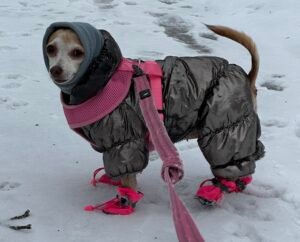
Cold ground, deep snow, icy footing, and wind can make it harder for dogs to feel safe and relaxed enough to eliminate. If your dog won’t potty in the snow, you’re not alone. For many dogs, winter dog potty problems are a comfort-and-confidence issue, not a training failure.
Quick Winter Potty Checklist
- Clear a small, consistent potty area so your dog isn’t standing in snow
- Stick to predictable potty times to help the body regulate
- Keep trips short and purposeful, business first, warmth second
- Reward immediately when your dog goes
- Use paw balm or boots if surfaces are painful, icy, or salted
Temporary management options:
For some dogs, indoor potty pads or a designated indoor potty setup can be used short-term while rebuilding outdoor comfort. This is a bridge, not a failure.
When to call your vet:
If your dog refuses to potty for extended periods despite comfort adjustments or shows signs of pain, straining, or distress, rule out medical causes.
Winter Behavior Issues Aren’t “Bad Behavior”
Increased chewing, barking, hyperactivity, and difficulty settling are often labeled as “regression,” but they’re usually not your dog forgetting their training. More accurately, these are winter dog behavior problems and signs of an under-stimulated dog whose daily outlets suddenly got smaller.
In winter, routines change fast. Walks get shorter, sniff time gets rushed, play happens less often, and dogs spend more time indoors with fewer novel sights, smells, and challenges. For many dogs — especially adolescents, working breeds, and anxious dogs — that drop in stimulation doesn’t just create boredom. It creates frustration, which is why a dog bored in winter often looks “worse” inside the house.
Dogs don’t act out because they’re bored in a casual way. They act out because boredom can build stress and excess energy, and the dog has to do something with it. Chewing helps relieve tension. Barking creates release. Zoomies burn off adrenaline. Even pestering you for attention can be your dog’s attempt to self-regulate and reconnect when they feel restless.
Why Mental Enrichment Matters More Than Ever
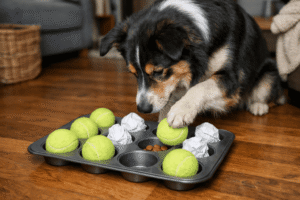
Mental enrichment isn’t a bonus — it’s a biological need. When walks get shorter, mental stimulation for dogs becomes one of the best ways to prevent winter dog behavior problems.
Short, focused mental work:
- Burns energy efficiently
- Reduces frustration and anxiety
- Improves impulse control
- Increases calm behavior indoors
- Strengthens your relationship with your dog
Ten to fifteen minutes of focused mental engagement can be as tiring as a long walk. When winter limits physical activity, indoor dog enrichment becomes the primary outlet, not a replacement.
Instead of trying to “wear your dog out,” winter is about helping them think, solve, and engage — and that’s what keeps dogs calmer and more settled inside.
10+ Mental Enrichment Activities Dog Parents Often Overlook
These are realistic, time-friendly options that work even on the coldest days.
1. Turn Meals Into Enrichment
Ditch the bowl when possible.
- Puzzle feeders
- Snuffle mats
- Scatter feeding indoors or outside in cleared areas
- Stuffed and frozen food toys
Eating becomes a job instead of a chore.
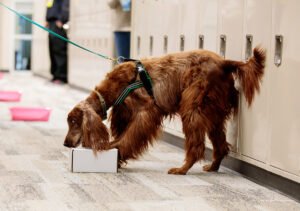
2. Nose Work Games
- Hide treats and encourage searching
- “Find it” games with food or toys
- Hide yourself and call your dog to find you
Sniffing is deeply calming and mentally exhausting.
3. Short Training Sessions
Training is brainwork.
- Practice basic cues with distractions
- Teach new tricks
- Work on impulse control games like stays or hand targets
Keep sessions short, upbeat, and reward-based.
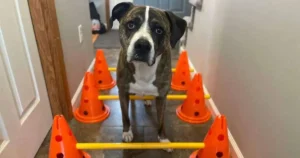
4. Indoor Movement Games
- Tug with rules
- Hallway fetch using soft toys
- DIY obstacle courses with household items
This combines physical movement with mental focus.
5. Toy Identification Games
Teach your dog to:
- Recognize toys by name
- Choose one item over another
- Retrieve specific objects on cue
These games challenge memory, decision-making, and focus.
“I Don’t Have Time” — Why Small Efforts Work
Mental enrichment doesn’t require hours, fancy equipment, or a perfect schedule. It works best when it’s built into the day you already have, especially during winter when indoor dog enrichment matters most.
Five minutes before meals, do a quick “find it” treat hunt.
Ten minutes while dinner cooks, give a frozen Kong or a snuffle mat.
One short training or tug session before bed, and your dog is far more likely to settle.
What matters most isn’t doing a huge session once in a while; it’s the steady, predictable rhythm of something each day. Consistency beats intensity. A few minutes of focused brain work repeated daily meets your dog’s needs, reduces frustration, and prevents the snowball effect where boredom turns into barking, chewing, and chaos by the end of the week.
Winter Is a Training Opportunity — Not a Setback
Winter often forces dog parents to slow down, and that slowdown can actually be a good thing. When walks are shorter, focusing on indoor training and winter dog enrichment can create calmer habits that carry into spring.
This season is ideal for:
- Building calm behavior indoors
- Strengthening communication and focus
- Improving impulse control
- Teaching real-life skills that stick
Dogs who learn to settle, think, and engage indoors often come out of winter more balanced than they went in.

One Last Thing
Behavior is information. It’s your dog’s way of saying, “I’m uncomfortable,” “I have too much energy,” or “I don’t know what to do with myself right now.” When we treat those signals as communication instead of defiance, we stop fighting symptoms and start solving the real problem. That’s when progress gets easier, faster, and more sustainable.
With the right balance of structure, mental enrichment, and training, winter dog behavior problems don’t have to be something you just survive. Winter can be the season you build calmer habits, stronger focus, and a better relationship — the kind that carries into spring and makes everyday life feel easier.
If you’d like help creating a winter plan tailored to your dog’s age, breed, and behavior needs, Coach Wags Dog Training can help. A clear plan, the right games, and a few targeted adjustments can turn winter from stressful to manageable — and set your dog up for long-term success.